

How To Clean A Brush After Using Stain
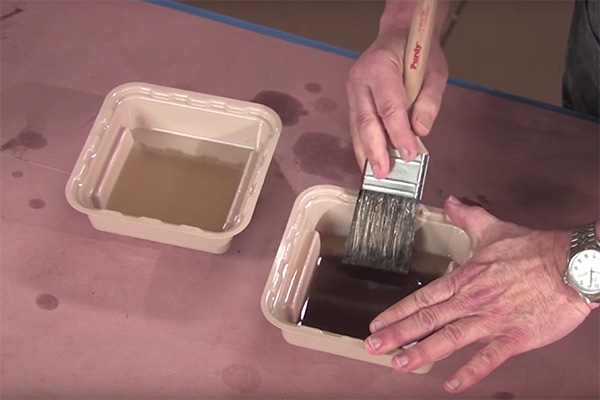
How should I clean oil stain and stop brushes? I use high quality (translation: expensive) brushes to exercise finish work and clean them with mineral spirits, booze, or turpentine, just I always end upwards with strong bristles and hence a useless castor. Leaving the brush in solution remedies the problem for 'next-mean solar day' jobs, just over long periods between projects, I'll lose another brush. Also, what am I to exercise with 3 quarts of muddy distillate? What does "dispose of properly" mean? Can I safely pour information technology down the sink?
John Brock: I too clean my brushes in mineral spirits, or alcohol. I have a pre-wash tin can (with a lid) that I use to clean off the worst of the mess. Then I'll partially dry the brush on a rag, so clean the brush in a second can of clean solvent. When the muddy can gets too bad to use, information technology gets poured into another tin can I use for settling. I go on two of these settling cans going. Afterwards the gluck settles out, I decant the now clear solvent band into the first wash can. When the secondary wash can gets a scrap grungy, it becomes a primary cleaning can. Eventually I end upward with a couple of containers of pretty nasty stuff. I take these to the county transfer station on household hazardous waste days. Call up to spread out your rags on a clean physical or the driveway to dry out. I wrap the clean brush in a wrapper of brown paper purse and secure information technology with a rubber band or slice of wire. To pre-condition a brush earlier using it, I soak it in the thinner advisable for the finish I'm going to employ. Pre-conditioning makes cleanup easier too.
Michael Dresdner: Allow me add one more stride to what John described, which volition give yous the supple results yous are seeking. After washing the brush in thinner and getting information technology as clean every bit possible, squeeze out most of the excess thinner, then have the castor immediately to the sink while the bristles are still wet. Wash the castor several times with plenty of warm water and soap. Both dish soap and shampoo piece of work well for this step. Past the 2nd or third washing, the soap volition foam up readily, indicating that all the solvent, and whatever varnish residue still mixed in the solvent, are gone. Now rinse the brush several times in clean water until all the soap is out of it, spin information technology to shake out the excess water, and place it back in the brush keeper to reshape it while information technology dries. If in that location is no cardboard keeper, wrap the brush in brownish bag newspaper, feel for the ends of the bristles, and then fold the paper over nearly an inch by the ends. This will form a keeper that will allow the h2o to wick off while the paper "sets" the hair of the brush.
As you lot must have guessed by John's comments, solvent tin be strained and re-used again and again. If you get to the point that information technology is generally sludge, and there is no reclamation facility nearby, but put the sludge in a shallow pan and let the solvent evaporate. In one case the sludge is completely dry, it tin can become in the trash, just not earlier. In no instance should you ever pour solvents, even make clean solvents, down the sink or drain. The one exception, of course, is clean alcohol.
Posted in:

Source: https://www.woodworkersjournal.com/cleaning-oil-stain-finish-brushes/
Posted by: valliereslosicessir.blogspot.com
0 Response to "How To Clean A Brush After Using Stain"
Post a Comment